You keep seeing the same two words next to Jev: TypeSafe AI. So you search for it, and half of what comes back is about type safety in programming, a Scala company from 2011, or a config library your JVM build already depends on. The other half is launch hype. None of it tells you what you actually want to know before you build on this model: who these people are, who is paying for it, and whether the company will still be around next year.
This guide answers that. TypeSafe AI is the San Francisco lab, founded in 2024, that built Jev — the decision model we covered in what Jev AI is and how it differs from a chatbot. Below you will find the founders, the funding, what the company ships today, where its docs live, and the claims worth double-checking.
We run jev-ai.org, a playground and API built on the Jev model, so we read TypeSafe's documentation for a living. Every fact here comes from TypeSafe's own pages (its team page, launch post and docs), its funding press release, or launch coverage from TechCrunch and SiliconANGLE. Where a number is reported rather than confirmed, we say so.
Last updated September 30, 2026. TypeSafe is weeks out of stealth and its limits, prices and access rules are still moving — the official pages linked below are the source of truth.
What Is TypeSafe AI? The Short Answer
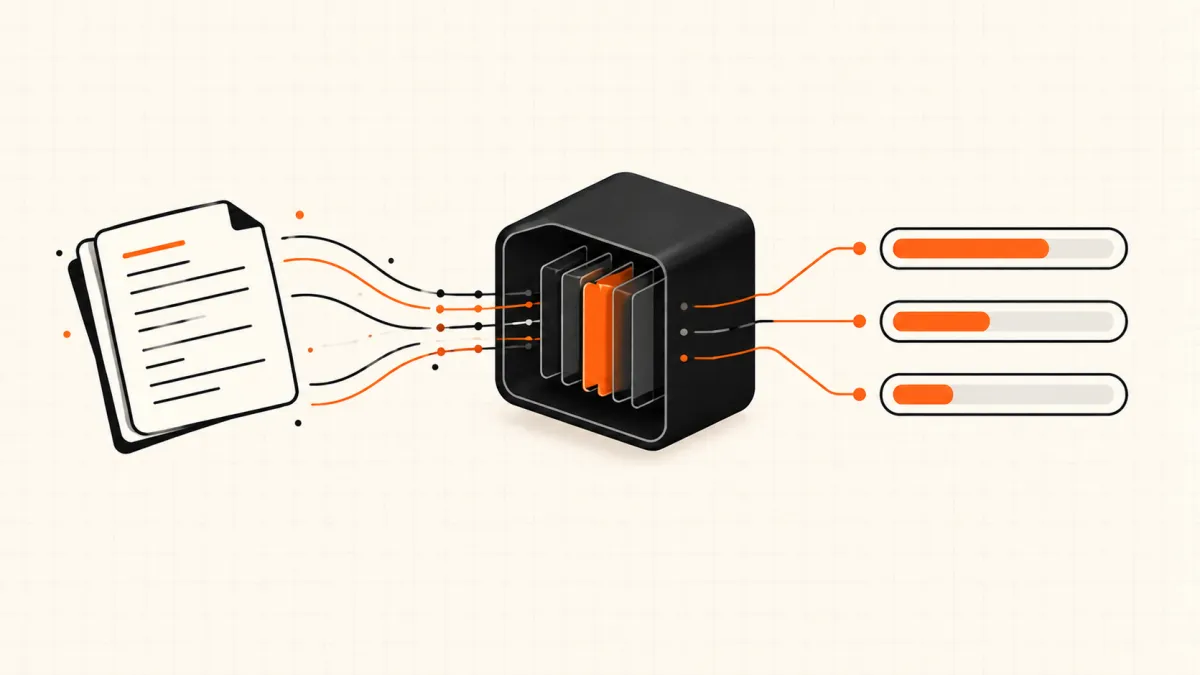
TypeSafe AI is an AI lab that builds models for software to call, not for people to chat with. Its first and so far only public model is Jev, which answers typed questions about a piece of text with probabilities instead of writing a reply. TypeSafe calls this new class "System One models" and trains them with a method it calls Reinforcement Learning for Calibrated Decisions (RLCD).
| TypeSafe AI at a glance | |
|---|---|
| Founded | 2024, in San Francisco |
| Founders | Diogo Almeida (CEO), Erik Gafni (CTO), Sasha Sheng (COO) |
| Funding | $40 million seed round led by DCVC, announced September 15, 2026 |
| Valuation | $200 million, as reported by Forbes (not confirmed by the company) |
| Time in stealth | About two years |
| First model | Jev, released in early access on September 15, 2026 |
| Current model version | jev-1.13.0, behind the aliases jev-latest and jev-preview |
| Access | Waitlist dropped on September 20, 2026; after a short pause, sign-up reopened to everyone on September 27 |
| List price | $0.042 per million input tokens; output tokens are free |
| Website and docs | typesafe.ai and docs.typesafe.ai |
The short version of the relationship people search for as "what TypeSafe AI is and its relation to Jev": TypeSafe AI is the company, Jev is its product. The company name is sometimes written TypeSafeAI or Type Safe AI; it is the same lab.
Which "TypeSafe" Did You Mean?
The word is crowded, and the search results show it. If you landed here by accident, here is the map:
| You searched for | What you probably wanted |
|---|---|
| typesafe (the concept) | Type safety — a language guaranteeing that values are used only as their type allows. Most "typesafe" searches are about this, not the company. |
| Typesafe, the Scala company | Typesafe Inc., founded in 2011 by Scala creator Martin Odersky and colleagues, renamed itself Lightbend in 2016. It has no connection to TypeSafe AI. |
| Typesafe Config | The JVM configuration library published under the com.typesafe package — a Lightbend-era project, unrelated to Jev. |
| Diogo Almeida | The TypeSafe AI co-founder is the machine-learning researcher described below. The name also belongs to other public figures, including a Brazilian comedian and actor. |
| JEV | In medicine, JEV is the Japanese encephalitis virus. The AI model is Jev, from TypeSafe AI. |
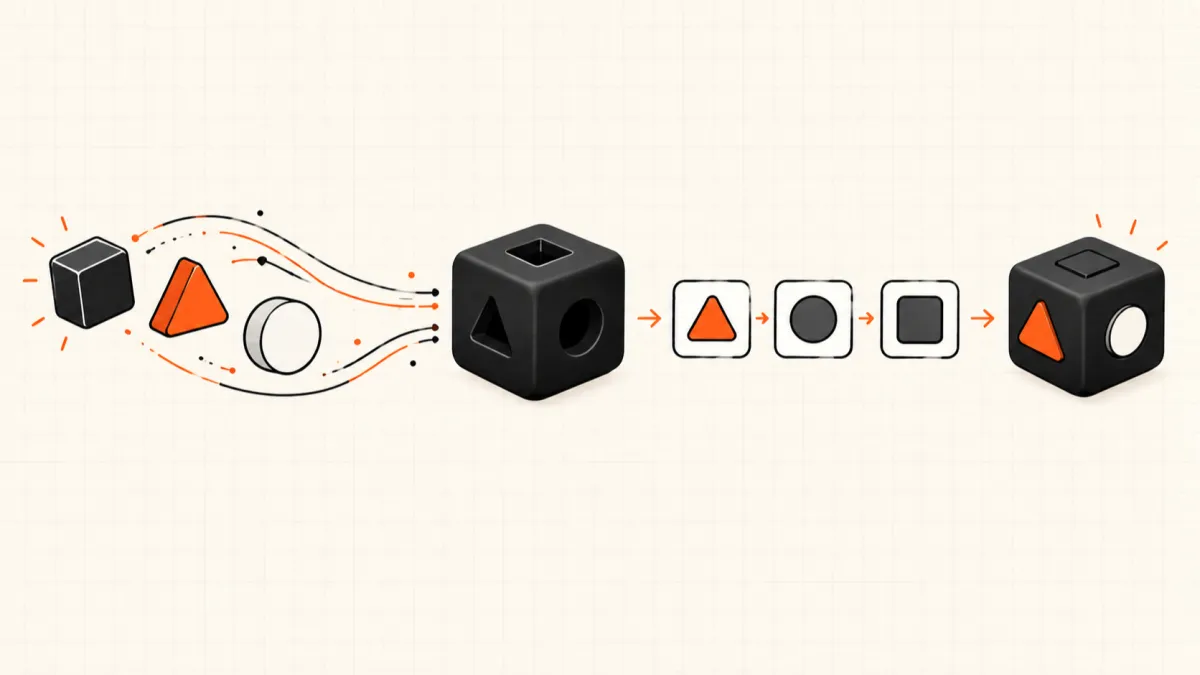
The pun is deliberate. A type-safe function can only return the kind of value it declares, and that is the promise TypeSafe makes about Jev: you declare the possible answers up front, and the model cannot return anything outside them.
The Founders: Who Is Behind TypeSafe AI?
TypeSafe was founded by three people, and the company's team page is the most direct source for who does what.
Diogo Almeida, CEO. The team page credits Almeida with co-inventing RLHF (reinforcement learning from human feedback) and InstructGPT, "the methods that lead to ChatGPT and GPT4", and notes he was previously at Google Brain. SiliconANGLE adds that his OpenAI work spanned RLHF, InstructGPT, ChatGPT and GPT-4. According to TechCrunch, he left OpenAI about two years before Jev launched because chat models, for all their ability, were not useful for automation — "We have lightning in a bottle, and yet it is not useful," as he put it.
Erik Gafni, CTO. A repeat founder — he started Ravel, a multi-modal AI company for DNA sequencing — and an early employee at two unicorns, Invitae and Freenome. The team page describes his specialty as building production AI systems.
Sasha Sheng, COO. A former research engineer at Meta and FAIR who worked on News Feed, AI experiences and AI research, with published work at NeurIPS and ECCV.
Around them, TypeSafe describes a close-knit, flat team drawn from OpenAI, Google Brain, Meta/FAIR, Stripe, Airbnb, Plaid and Docker, working in person five days a week in San Francisco. It is hiring; open roles are linked from the company homepage.
Funding and Timeline
TypeSafe spent roughly two years in stealth and came out all at once. The timeline, from first-hand sources:
| Date | What happened |
|---|---|
| 2024 | TypeSafe AI founded in San Francisco by Almeida, Gafni and Sheng |
| 2024–2026 | About two years in stealth, building the model, sampler and training method |
| September 15, 2026 | Exits stealth with a $40 million seed round led by DCVC; Jev released in waitlisted early access |
| September 17–18, 2026 | InfoWorld and TechCrunch coverage; TechCrunch reports demand briefly knocked the API offline |
| September 20, 2026 | TypeSafe announces on X that the waitlist is gone, with a starting credit for new accounts |
| September 21, 2026 | Sign-ups paused because of demand; existing accounts keep working |
| September 27, 2026 | Sign-ups reopen and the homepage announces "No more waitlist"; new accounts no longer get free credits |
The round was announced in a Business Wire release, which describes TypeSafe as "a frontier AI lab building machine-native, composable AI". DCVC general partner James Hardiman is quoted calling the problem TypeSafe is tackling "one of the biggest remaining challenges in AI". SiliconANGLE notes that Forbes, citing a person familiar with the deal, put the valuation at $200 million; TypeSafe itself has not published a valuation.
What TypeSafe AI Believes
Most AI labs publish a mission statement. TypeSafe's is unusually specific, and it explains every design choice in Jev.
- Automation will be machine-to-machine. TypeSafe's AI primer says it expects large-scale automation to be "closer to 99% machine-to-machine interactions and 1% human interaction". A model built for that should be judged on structure, speed, consistency and cost, not on how pleasant its prose is.
- "Build prod, not God." The company says it is not chasing AGI. Its manifesto argues today's models are already smart enough to create enormous value; the bottleneck is that their intelligence is hard to build on.
- The right task beats scale. TypeSafe's essay "The Bitterest Lesson" ranks what matters in machine learning as the right task, then data, then compute, then algorithms — and uses InstructGPT, where a much smaller model trained on the right task beat GPT-3, as the proof.
- RLHF is the wrong objective for automation. TypeSafe argues that training models to produce text people prefer rewards sycophancy and confident-sounding mistakes. RLCD replaces human preference with calibration: a 0.8 should be right about 80% of the time.
- It makes its own data. The launch post says TypeSafe generates all of its training data itself and does not train on customer requests. TechCrunch reports the model is trained exclusively on synthetic data.
If you want the mechanics of how those ideas turn into a model, we unpack them in our guide to how Jev works.
What TypeSafe AI Ships Today
Two weeks after launch, TypeSafe's public surface is small but complete enough to build on:
| Product | What it is |
|---|---|
| Jev | The model. jev-1.13.0 is the current build; jev-latest follows official releases and jev-preview any newer preview. |
| System One API | One endpoint, POST https://api.typesafe.ai/v1/systemone, plus GET /v1/models. |
| Console and Playground | console.typesafe.ai — sign-up, API keys and a browser playground. |
| Client SDKs | Official Python (typesafe-sdk-python) and TypeScript/JavaScript (typesafe-sdk-js) libraries. |
| Agent skill | A drop-in skill that teaches Claude Code, Codex and similar coding agents to write correct TypeSafe integrations. |
| System One Adapter | An open-source Python client that runs the same questions against OpenAI, Anthropic or Gemini models, so you can compare them with Jev. |
| WorkflowEvals | The published code behind the workflow evaluations TypeSafe uses for its speed and cost claims. |
All of the open-source pieces sit under the typesafe-ai organisation on GitHub. What is not there is the model itself: TypeSafe has released no weights, no architecture paper and no local build. Jev is a hosted model you call over an API.
TypeSafe's own list price is $0.042 per million input tokens — $42 per billion — with output tokens free. The company's homepage FAQ says it can serve Jev profitably at that price.
A Reader's Map to the TypeSafe AI Docs
The documentation at docs.typesafe.ai is where TypeSafe is most candid, and it is organised for developers who already know what an API key is. If you only have twenty minutes, read it in this order:
- System One — what the model class is and how it differs from an LLM.
- Primitives — the three question types:
choice,scoreandnoul. - Confidence — how certainty is reported and how to turn it into act, review or escalate.
- Jev 1.13 jaggedness — the page most write-ups skip. TypeSafe lists the model's known failure modes: literal reading, counting and arithmetic, comparing dates, multi-hop indirection, large irrelevant state, adversarial content, and text generation.
- Models — prices, rate limits, the context budget and aliases.
- Patterns and Cookbooks — worked examples from intent routing to citation checks and re-ranking.
A lab that publishes a page titled "Jev isn't perfect" before anyone asks is giving you a useful signal about how it wants to be judged.
What Most TypeSafe AI Write-Ups Get Wrong
TypeSafe moved fast in its first two weeks, and a lot of what ranks for its name was written on launch day. Checked against first-hand sources on September 30, 2026:
| You will read | What the first-hand sources say |
|---|---|
| "Access is waitlist-only" | True at launch. TypeSafe dropped the waitlist on September 20, paused sign-ups a day later and reopened them to everyone on September 27. |
| Launch-day rate limits | The Models page now lists 100K tokens per second and 40 requests per second, and warns that limits are "adjusting dynamically" as capacity lands. Re-check before you plan. |
| "Jev is a new LLM" | InfoWorld used that phrase. TypeSafe's own position is that Jev is "neither small nor an LLM", and TechCrunch reports it is transformer-based but not a large language model. |
| "193.6× faster, 444.6× cheaper" | These come from TypeSafe's own four workflows. The launch post says they are "on the higher end of real world gains" and that its reference answers are biased toward OpenAI and Anthropic models. SiliconANGLE notes they have not been independently verified. |
| "A $200 million company" | A Forbes report citing a source, not a figure TypeSafe has published. |
| "Can't hallucinate" | Jev cannot return an answer outside the options you declare. TypeSafe's own FAQ is clear that it can still pick the wrong one. |
None of that makes TypeSafe less interesting. It makes the difference between planning around a launch claim and planning around what the company actually commits to.
You do not have to take any of it on trust, either. Open the Jev AI playground, paste a real support ticket or review into one of the nine preloaded scenarios, and watch the probabilities come back. Editing the scenarios needs no account.
Is TypeSafe AI Legit? A Builder's Checklist
"Legit" is the wrong question for an early-stage vendor; "safe to depend on for this workload" is the right one. Here is how the evidence stacks up.
In TypeSafe's favour
- Named founders with a verifiable research track record, and a lead investor, DCVC, that put its name on a public announcement.
- Public, detailed documentation, including a page listing the model's weaknesses.
- Transparent per-token pricing and official open-source SDKs.
- A narrow, testable product: every answer is typed, so your own evaluation can be exact.
Worth weighing before you commit
- It is a hosted-only model. No weights and no self-hosting; if TypeSafe is down, so is your call. The launch post says the service is currently based on the US West Coast, and TechCrunch reports launch demand briefly took the API offline.
- Limits are still moving. Rate limits have changed since launch and the docs say they will keep changing while capacity is added.
- Little is published about the model internals. No architecture paper, no parameter count and, by choice, no public benchmark scores. Outside observers suspect it sits on an open-weight LLM; the company has not confirmed that.
- Calibration is a group property. TypeSafe says so itself: a well-calibrated model is right at the stated rate across many predictions, not on every single one.
Rule of thumb: put Jev behind an interface you own, log the model_version of every answer, pin a version once you have tuned thresholds, and keep a fallback — a person or a reasoning model — for the low-confidence tail. That is good practice with any model vendor; with a two-week-old one, it is essential.
How to Try TypeSafe AI's Model
There are three ways to run Jev today:
- Directly from TypeSafe. Create an account at typesafe.ai, add billing (new accounts no longer get free credits), get a key from the console, and call
api.typesafe.ai/v1/systemoneor use the official SDKs. - Through OpenRouter, where Jev is listed as
typesafe/jev-1.13at the same list price — see our OpenRouter Jev guide. - On jev-ai.org. Sign in for five free credits — no card and no waitlist — and run the model in the playground, in a CSV batch job, or through the Jev AI API. The request body you build in the playground is the one your code sends.
Whichever you choose, start with one decision you already make today, and compare the answer and its cost with what you get from your current model.
FAQ
Is TypeSafe AI part of OpenAI?
No. TypeSafe AI is a separate company funded by DCVC and others. Its CEO worked at OpenAI before founding it, which is where the association comes from — we cover the full story in is Jev made by OpenAI.
Who founded TypeSafe AI?
Diogo Almeida (CEO), Erik Gafni (CTO) and Sasha Sheng (COO), in 2024.
How much has TypeSafe AI raised?
$40 million in a seed round led by DCVC, announced September 15, 2026. Forbes reported a $200 million valuation; the company has not published one.
Is TypeSafe AI the same as Typesafe or Lightbend?
No. Typesafe Inc. was the Scala company founded in 2011, renamed Lightbend in 2016. TypeSafe AI is a different company founded in 2024.
Where are the TypeSafe AI docs?
At docs.typesafe.ai. They cover the System One concept, the three question types, confidence, known failure modes, models, patterns, cookbooks, the HTTP API and the Python and JavaScript SDKs. The jev-ai.org API has its own documentation.
Does TypeSafe AI have a GitHub?
Yes — the typesafe-ai organisation hosts the official SDKs, the agent skill, the System One Adapter and the workflow-evaluation code. It does not host Jev's weights, which have not been released.
Is there still a TypeSafe AI waitlist?
No. TypeSafe dropped the waitlist on September 20, 2026 and, after a pause, reopened sign-ups to everyone on September 27. New accounts no longer come with free credits.
The Bottom Line
TypeSafe AI is a small, well-funded lab betting that the next wave of AI will be called by software, not read by people — and Jev is the first test of that bet.
- It was founded in 2024 by Diogo Almeida, Erik Gafni and Sasha Sheng, and raised a $40 million seed round led by DCVC.
- It ships one model, Jev, through an API, a console, official SDKs and unusually candid documentation.
- Its bolder performance numbers are self-tested; its price, output contract and failure modes are published and checkable.
- It is early, hosted-only and still adjusting its limits, so build with a version pin and a fallback.
The quickest way to judge the company is to judge the model. Try Jev in the playground on a decision your code already makes, then decide whether it has earned a place in your stack.
Sources
- Team — TypeSafe AI — Founders, roles and backgrounds, team composition and location.
- Introducing System One Models & Jev — TypeSafe AI — Launch date, RLCD, pricing, training data and the caveats on the benchmark multipliers.
- TypeSafe AI Emerges From Stealth With $40M in Funding — Business Wire — Funding, lead investor, founding year and headquarters.
- A new kind of AI model from a ChatGPT inventor is thrilling developers — TechCrunch — Almeida's move from OpenAI, synthetic-data training and the unpublished architecture.
- TypeSafe AI exits stealth with $40M — SiliconANGLE — Founders' OpenAI background, the reported valuation and the unverified benchmark figures.
Company facts, access rules and rate limits are as published on September 30, 2026. The waitlist change and current rate limits come from TypeSafe's homepage and Models documentation, which are updated without notice.